A love letter to the ones who built Stockholm
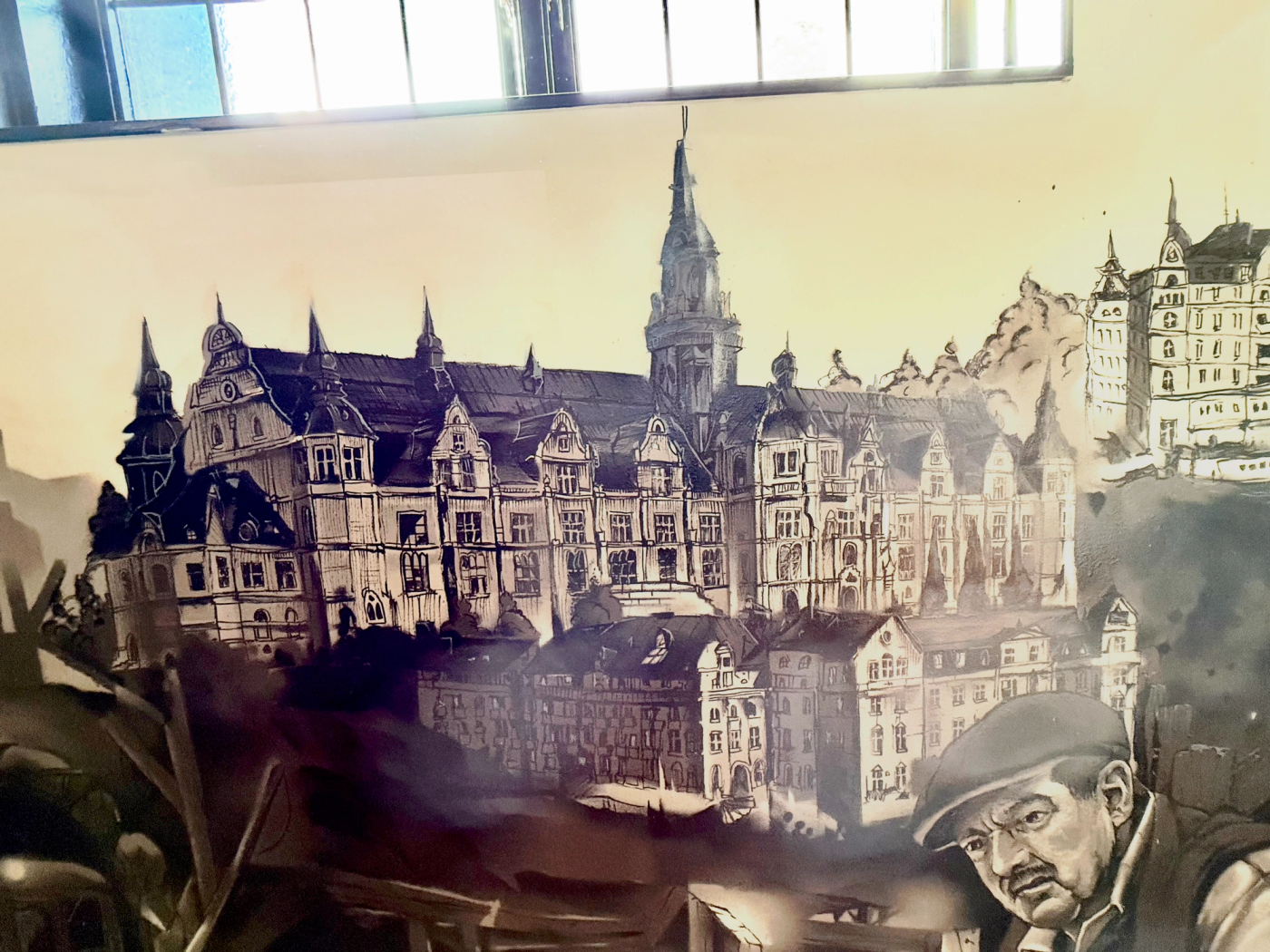
Simple brief: make this staircase inspire people with how epic it is to build something. The wall blends some of Stockholm's most iconic old buildings with the everyday grit of the job site, like one photograph spanning a hundred years of Swedish craft. Best viewed live at XL BYGG Lebe Byggvaror in Tyresö, Stockholm.
Follow along on a tour of Stockholm:
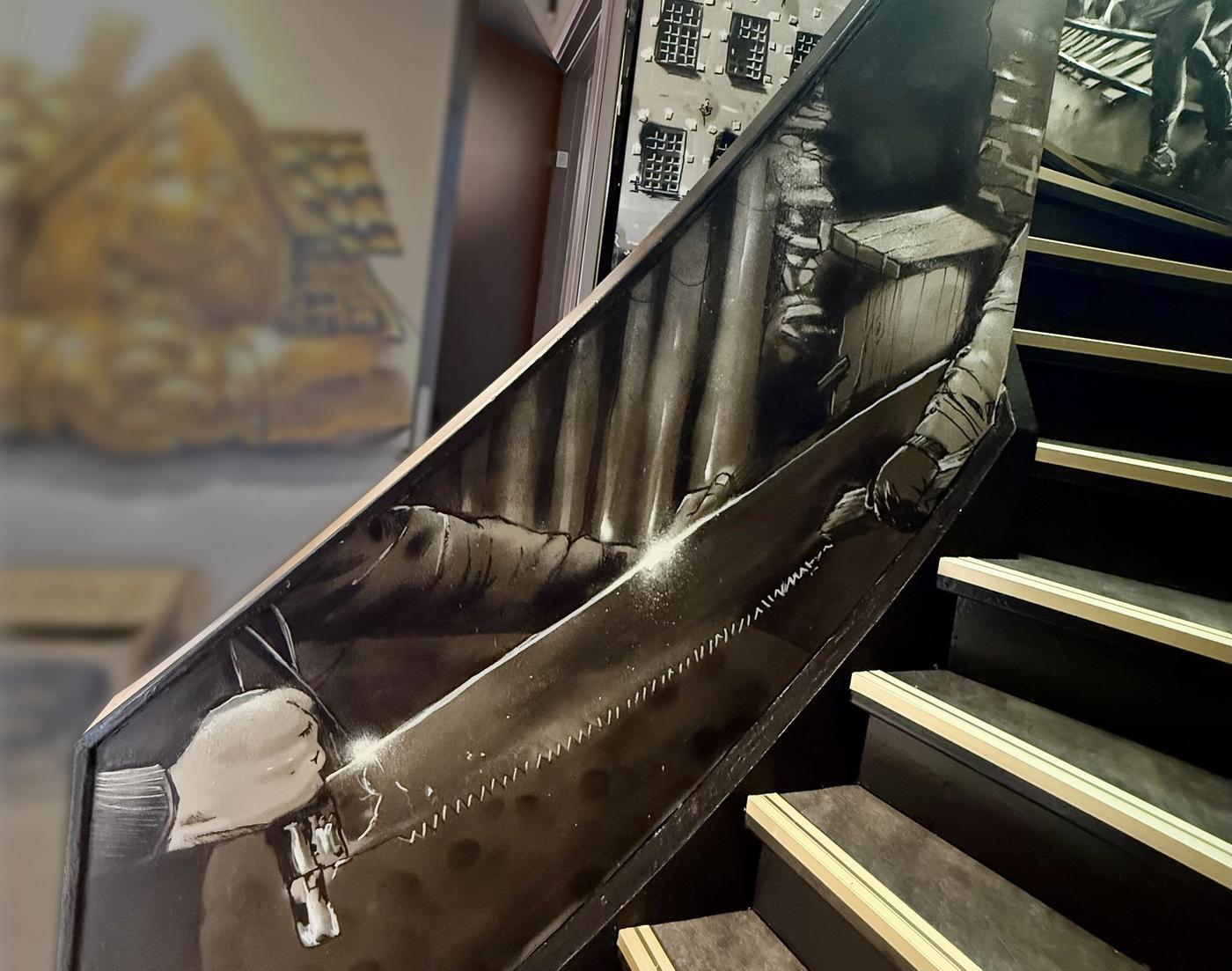
Before cranes and forklifts took over, the timber truck was the workhorse of every building site in Stockholm. Loaded heavier than it had any right to be, it hauled the beams and boards that turned blueprints into buildings, rattling through the city one delivery at a time. A small tribute to the machines that carried the weight nobody noticed.

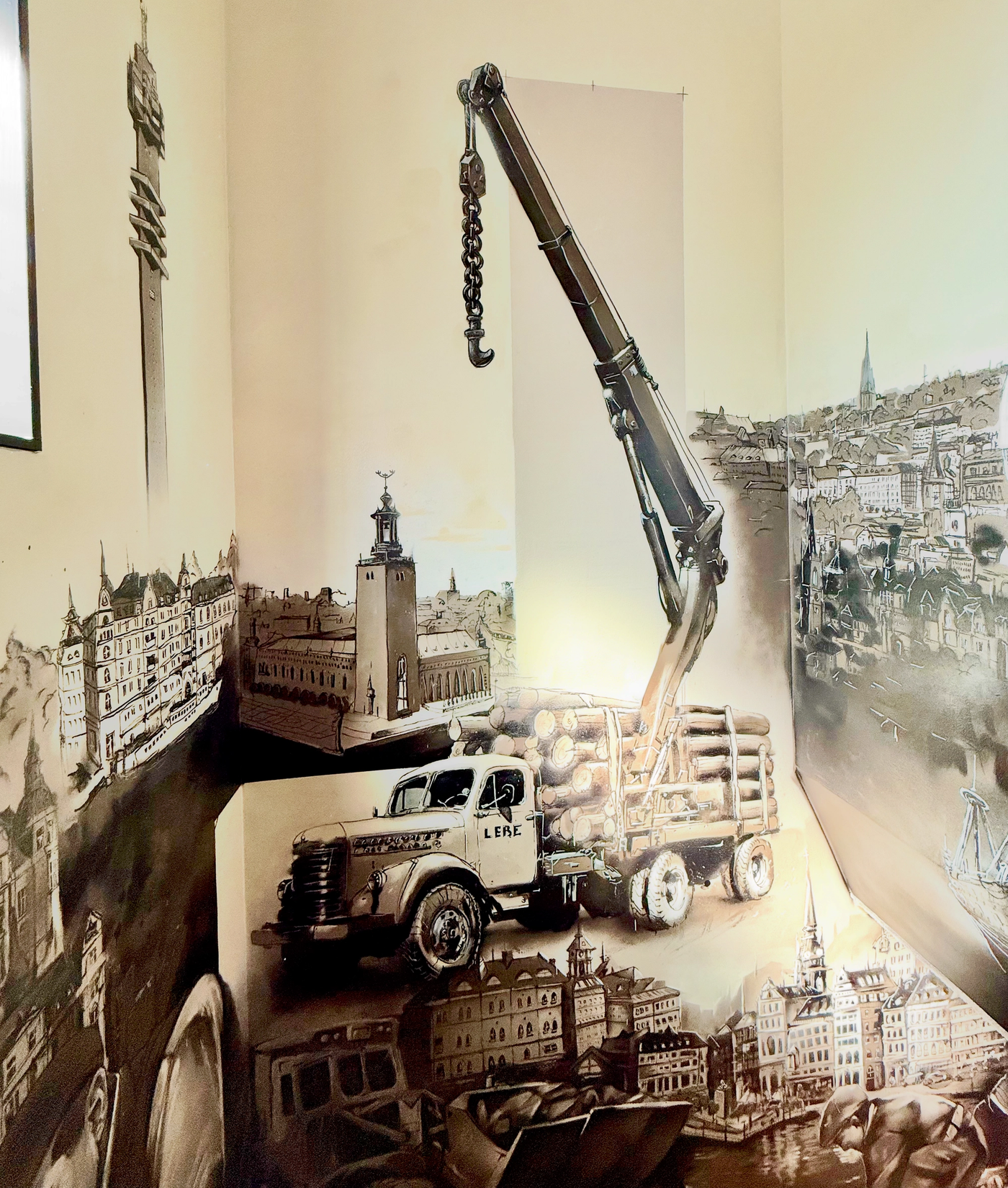
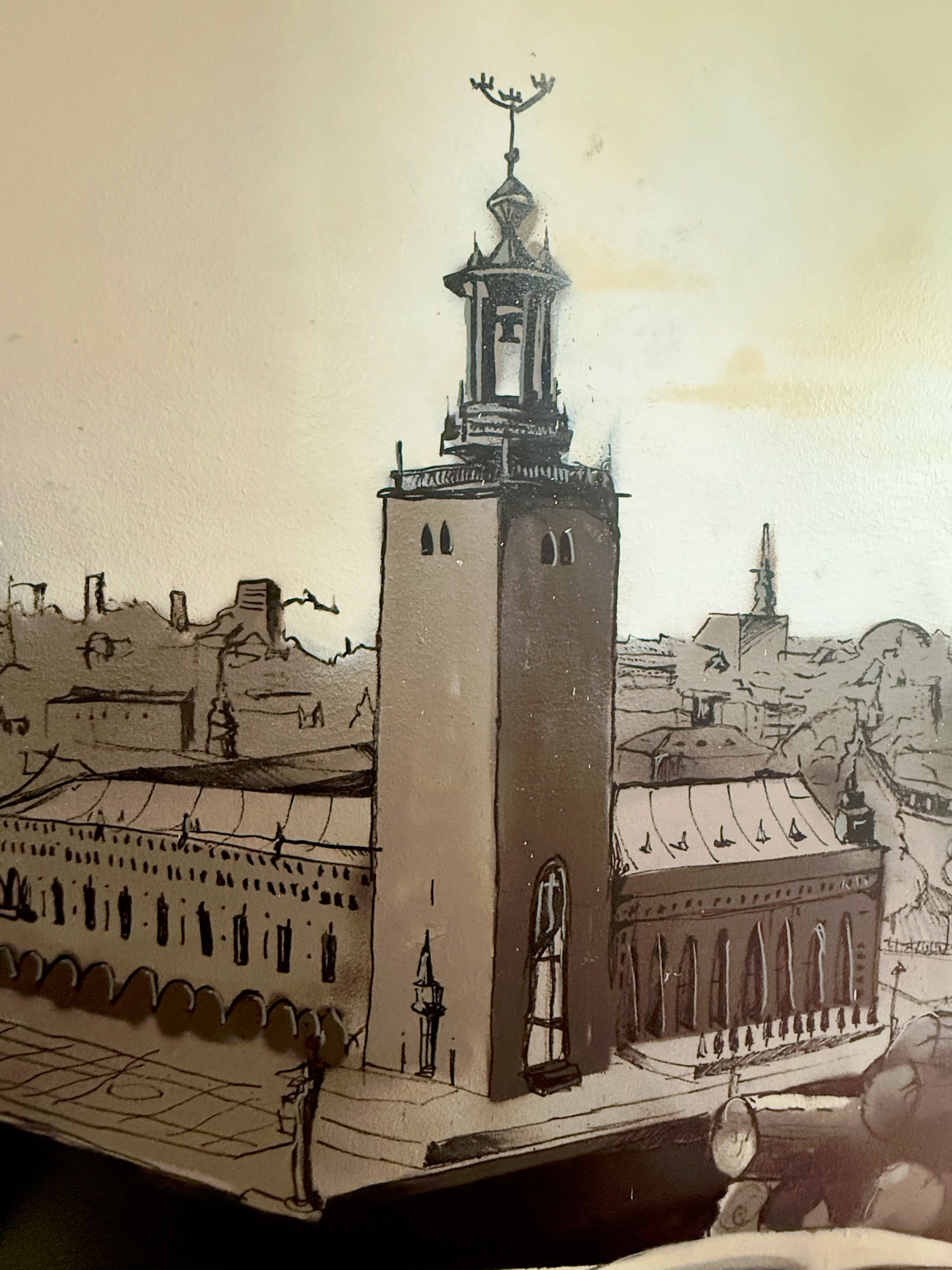
Stockholms stadshus is the city's town hall, built between 1911 and 1923 by architect Ragnar Östberg. It's the building most people picture when they think of Stockholm: the tower with the Three Crowns, the red brick, the Nobel Prize banquet held inside every December.
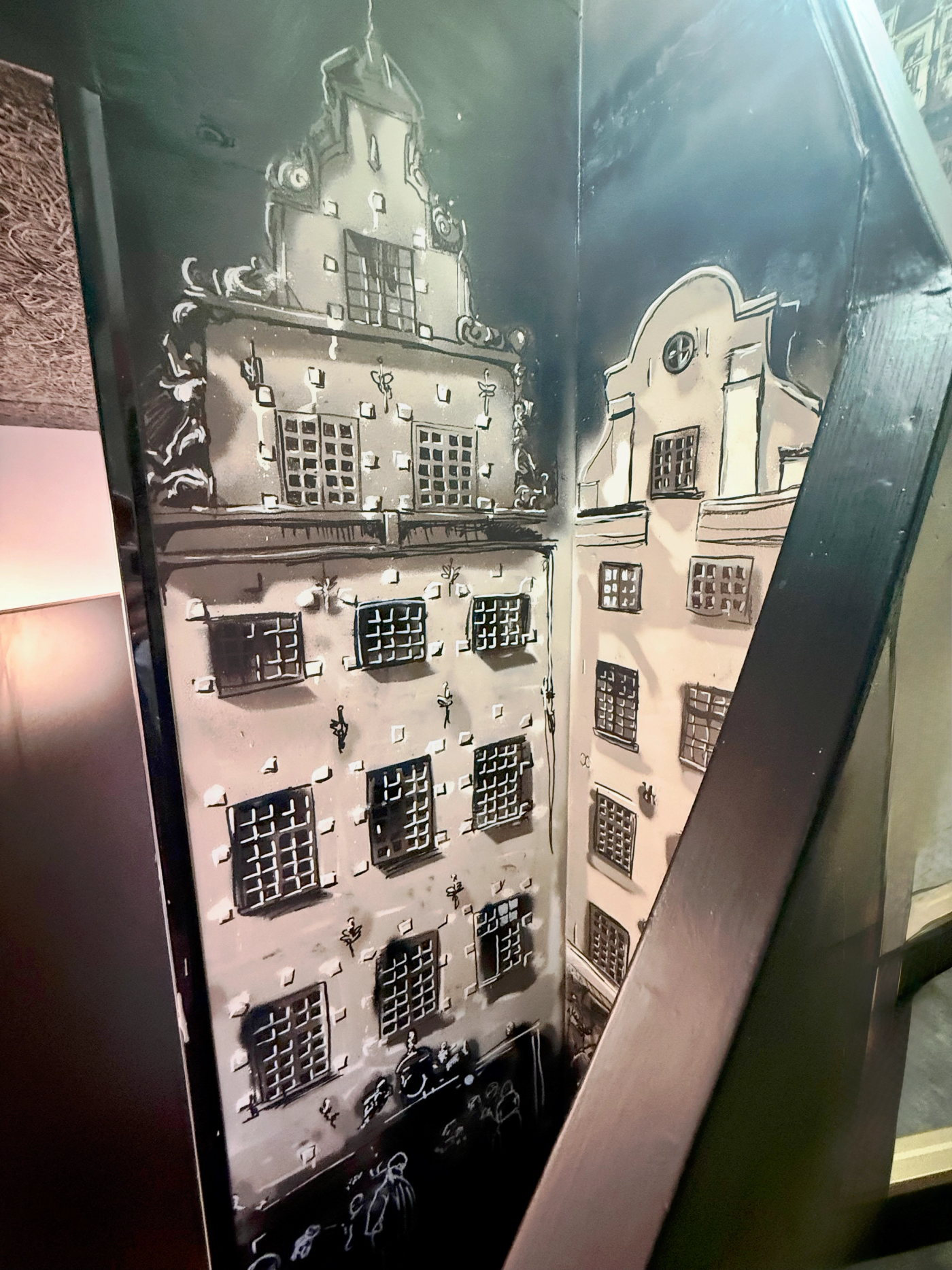
Schantzska huset, the taller building with the red facade and unique white bricks, sits right on Stortorget in Gamla Stan next to Seyfridtzska huset. Together with the rest of the gabled merchant houses lining the square, they make up one of the most photographed views in Stockholm, built up over centuries and named after later owners rather than the people who first put them there. I tucked them into a perfect corner of the stairwell, just like they stand around the square where the city itself began.
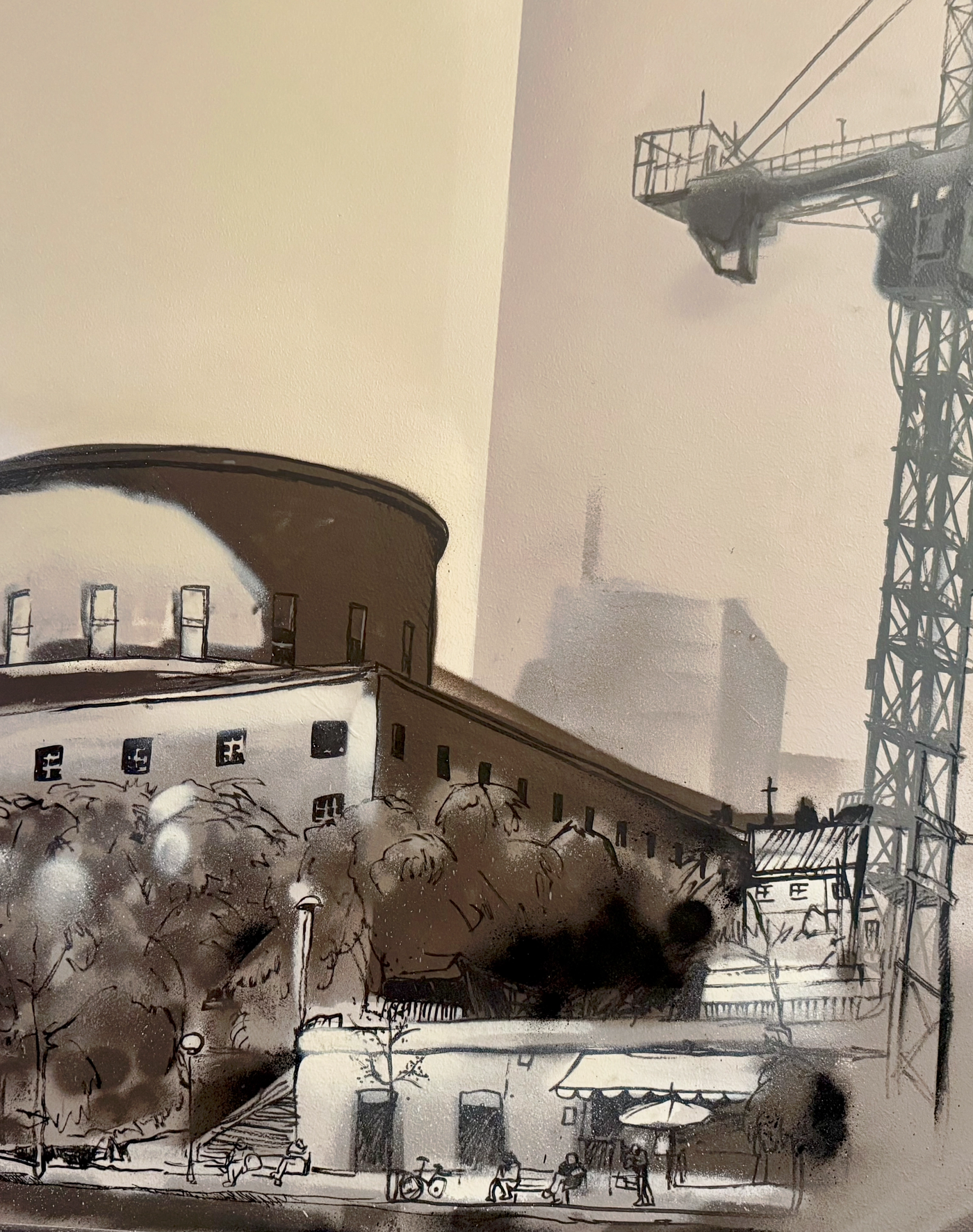
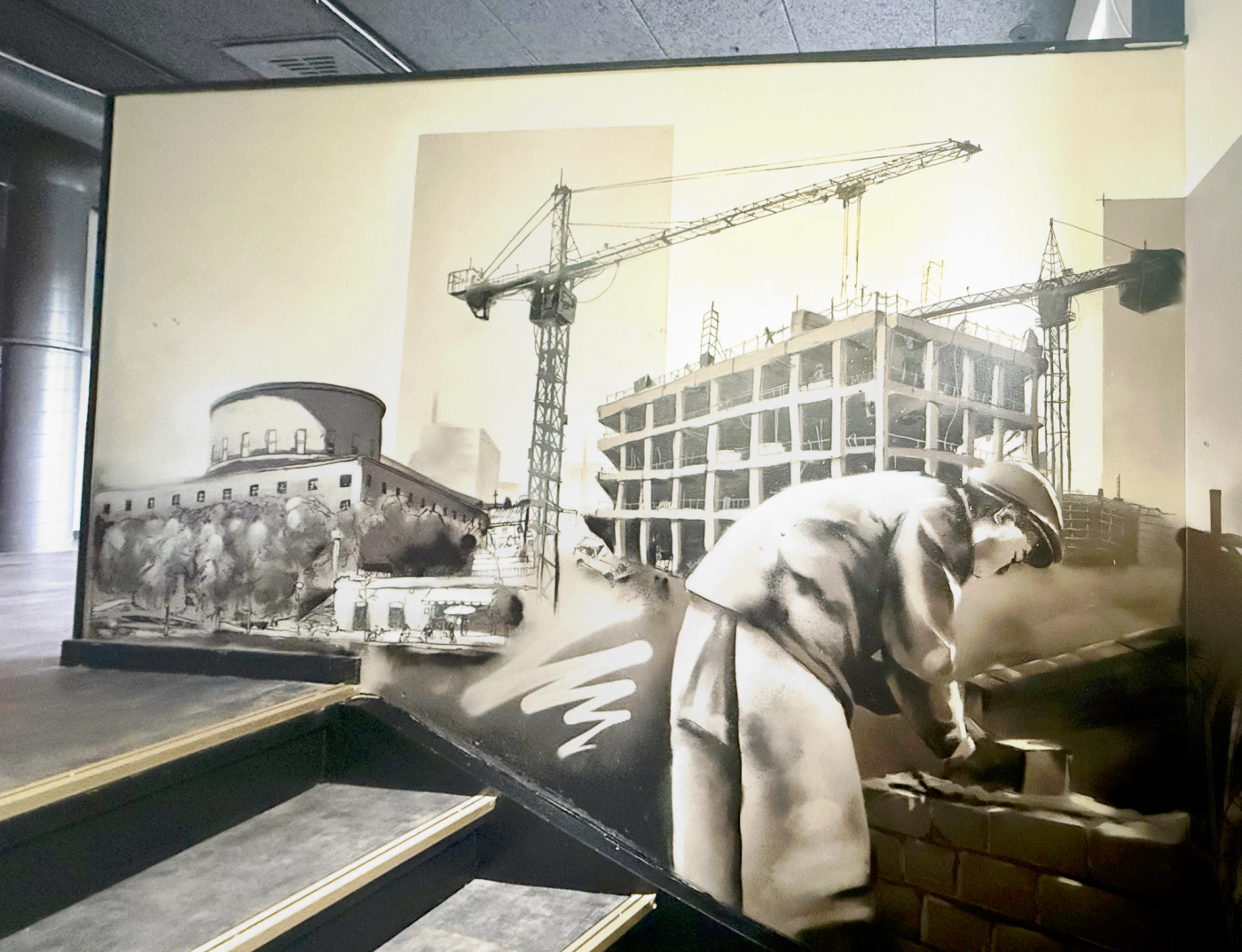
This one has Stockholms stadsbibliotek, the round drum-shaped library designed by Gunnar Asplund and opened to the public in 1928, one of the most recognizable library buildings in the world. In front of it, the mural switches from landmark to labor: cranes reaching up over a construction site, and a bricklayer hunched over the wall he's building, one brick at a time.
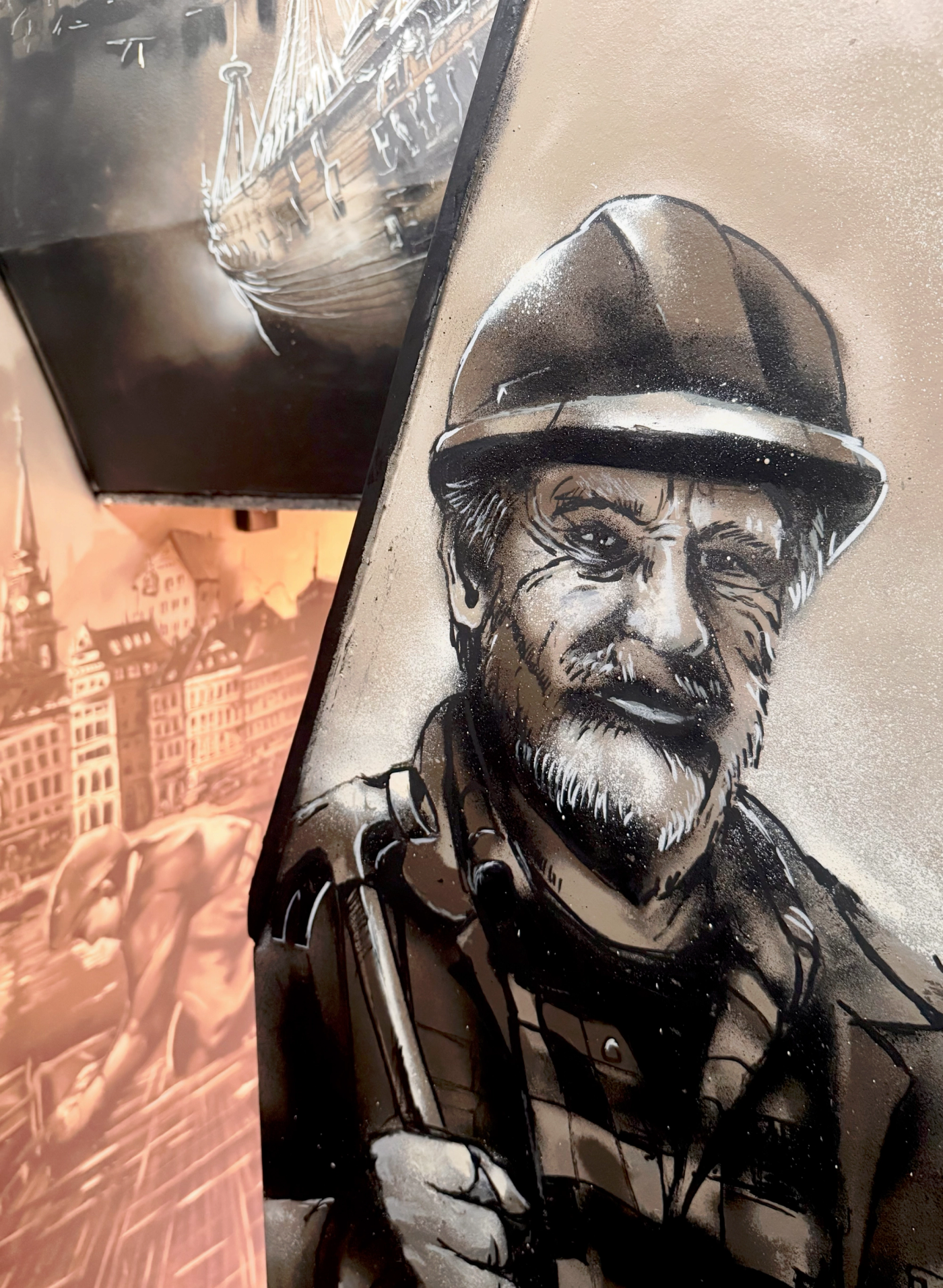
Here's one of the men behind our beautiful city's constructions, the kind of person history books skip over in favor of architects and kings. Every building on this wall, the stadshus, the library, the old merchant houses on Stortorget, got built because someone like him showed up every morning and did the work. Not a footnote here. He's the point.
You didn't think I'd forget these two major landmarks, did you?
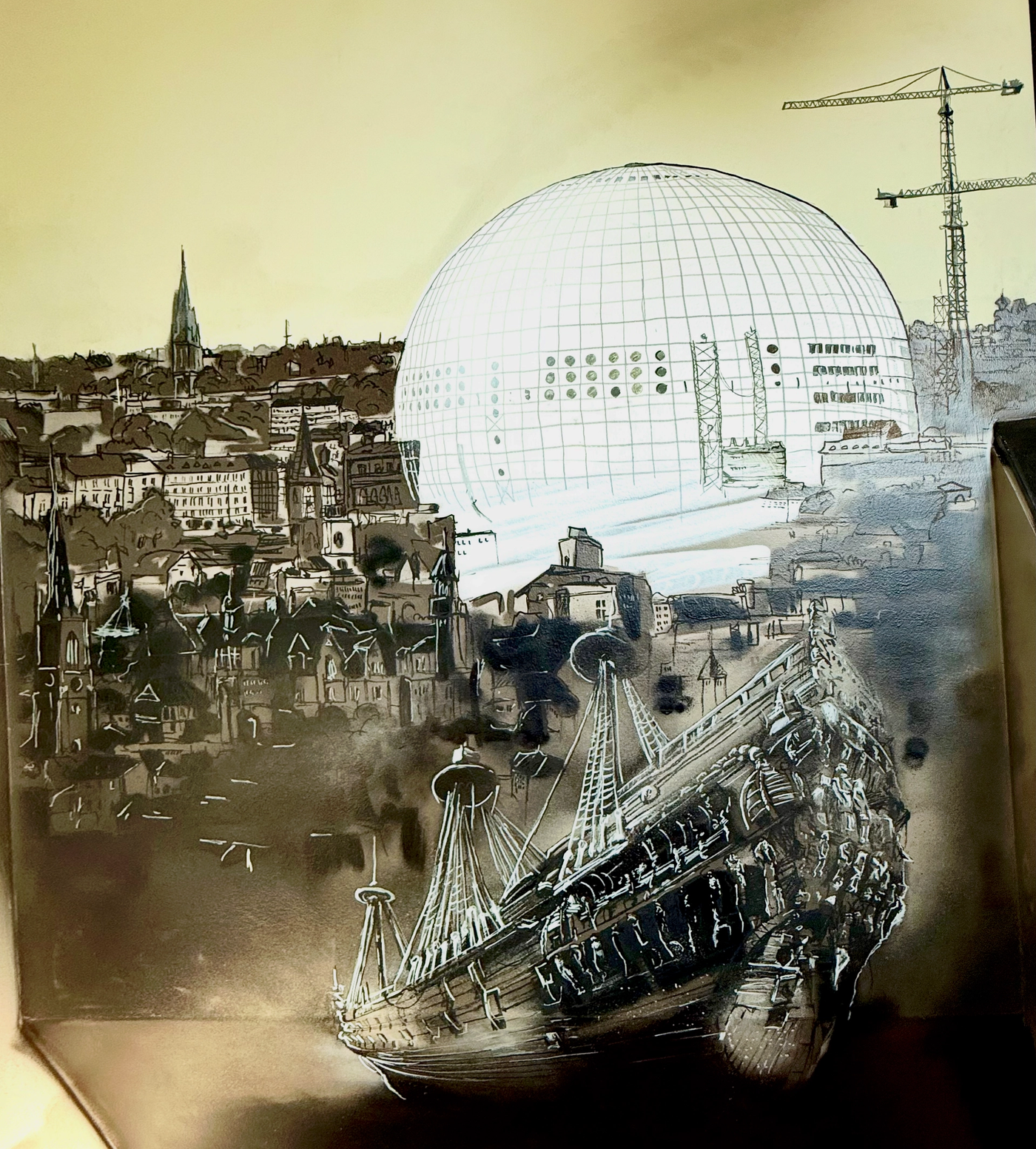
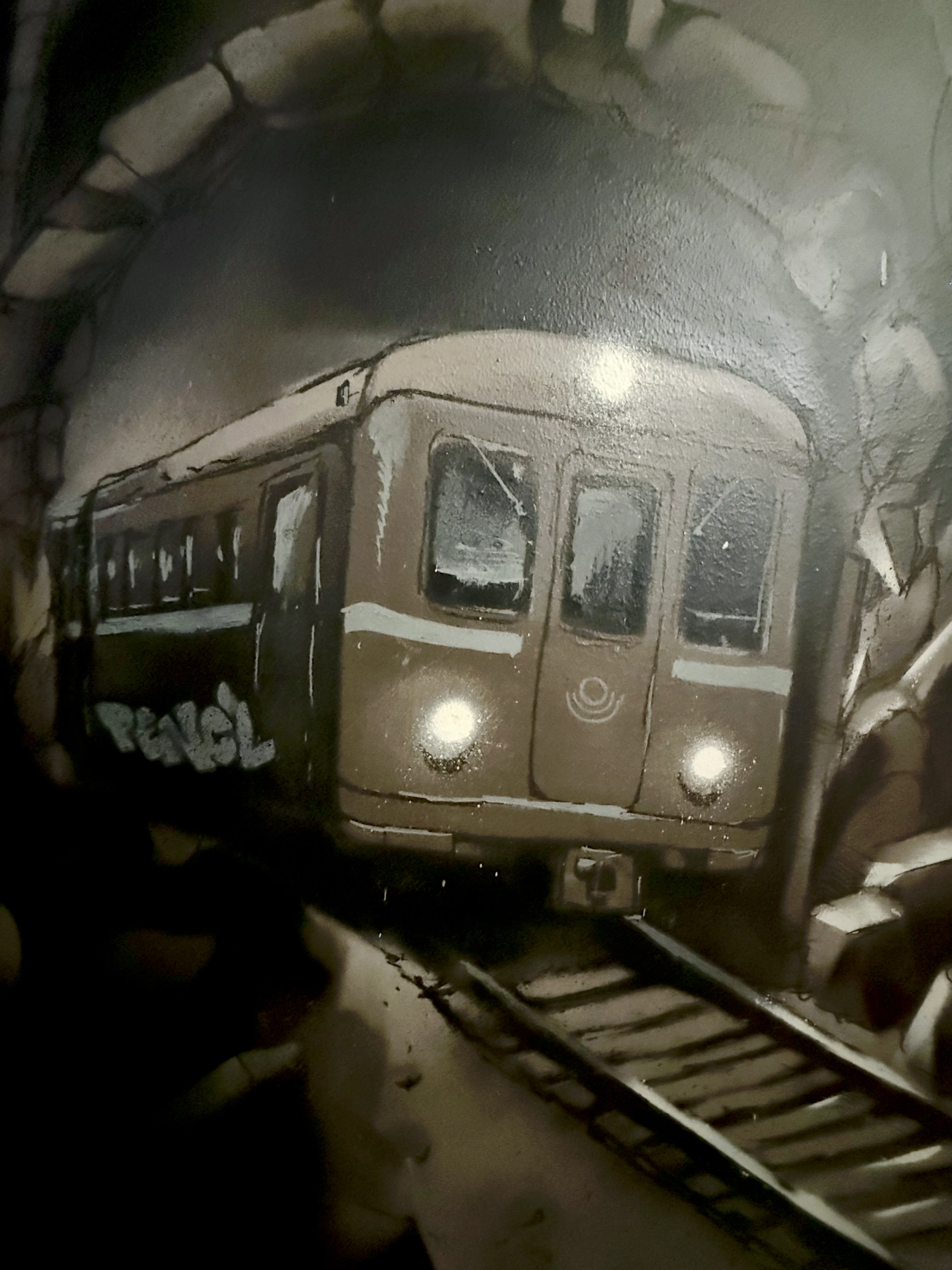
The subway broke ground in the 1940s and opened its first stretch, Slussen to Hökarängen, in 1950. I couldn't help myself and put my own tag on the side of it.
Built between 1889 and 1907, it still stands proud on Djurgården. I had never noticed how beautiful this building is until I painted it. I wonder how many windows there are in this entire wall…